Rather than selling isolated class hours, the Lab connects assessment, technical training, project execution, and research communication around each student’s interests, preparation, schedule, and goals.
Personalized Roadmap
A staged plan aligned with the student’s grade level, coding and mathematics foundation, interests, and long-term goals.
Signature Project
A distinctive AI or robotics project developed through data collection, experiment design, implementation, analysis, and iteration.
Research Portfolio
A verifiable record of growth through websites, GitHub repositories, technical reports, posters, videos, or submission materials.
Research directions backed by working evidence
These are not stock topics. Each direction is connected to a completed experiment, reproducible artifact, public evidence review, or an explicitly labeled active-development program.
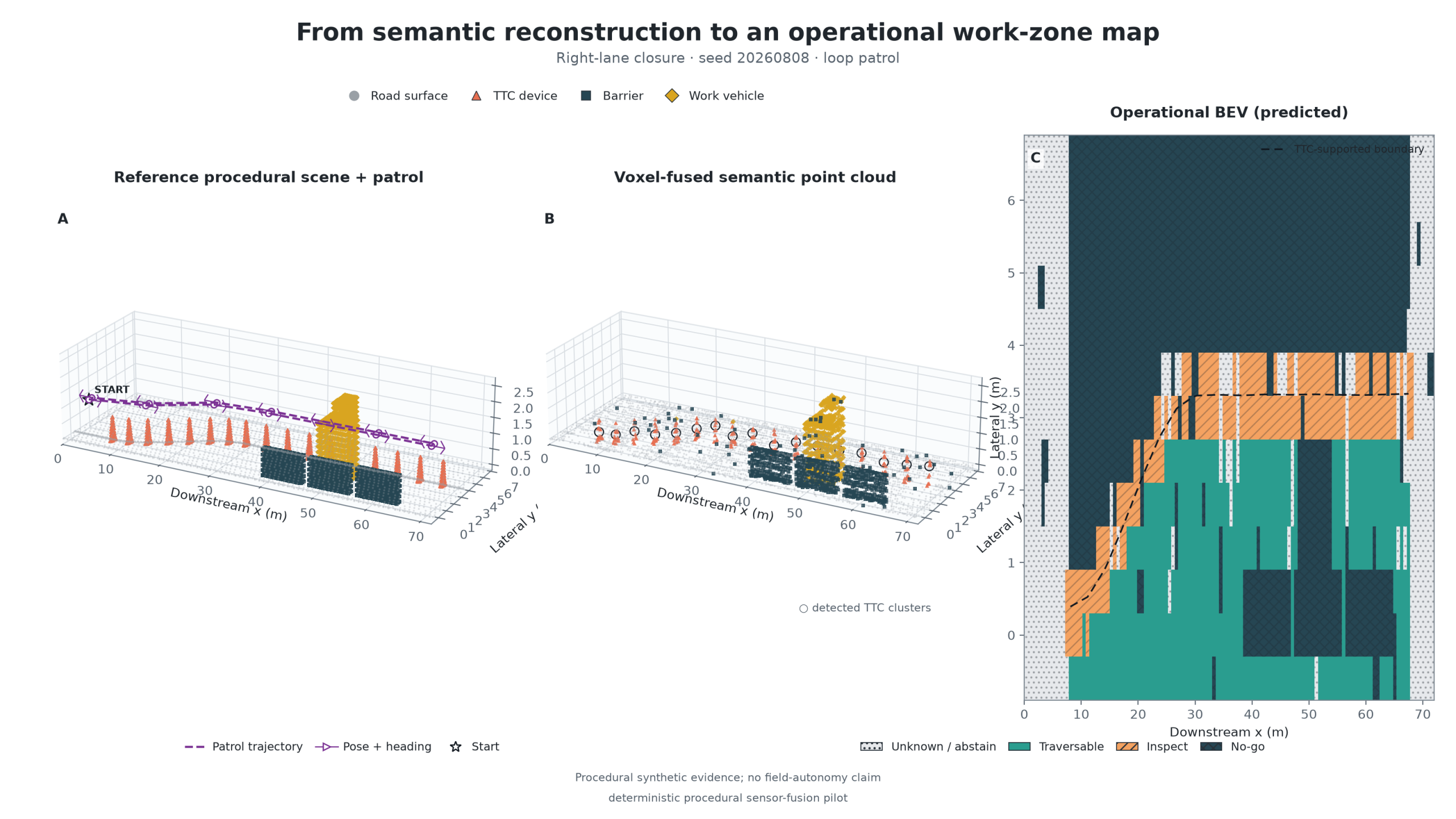
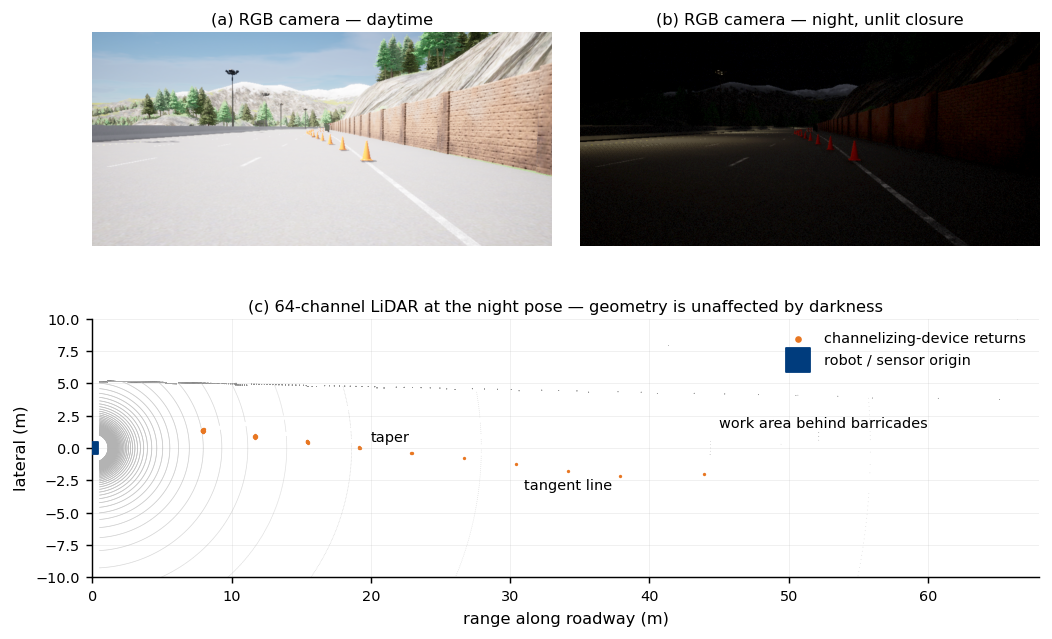
Multi-view 3D observations are fused into an uncertainty-aware operational map. The page includes the extended abstract, executed notebook, CSV results, protocol, and validation files.
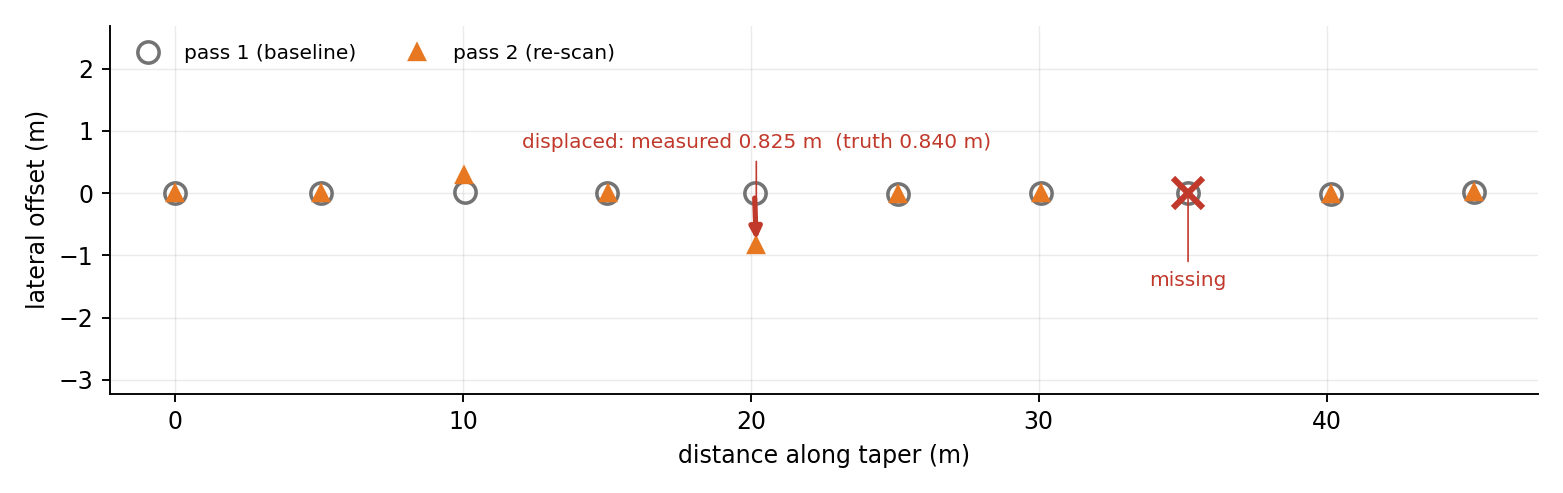
0.84 m displacement recovered within 15 mm; removal flagged with no false positives at the registered gate
A fixed-seed CARLA patrol compares baseline and repeat scans to identify displaced or missing traffic-control devices—and reports the topple case that the centroid-only method missed.
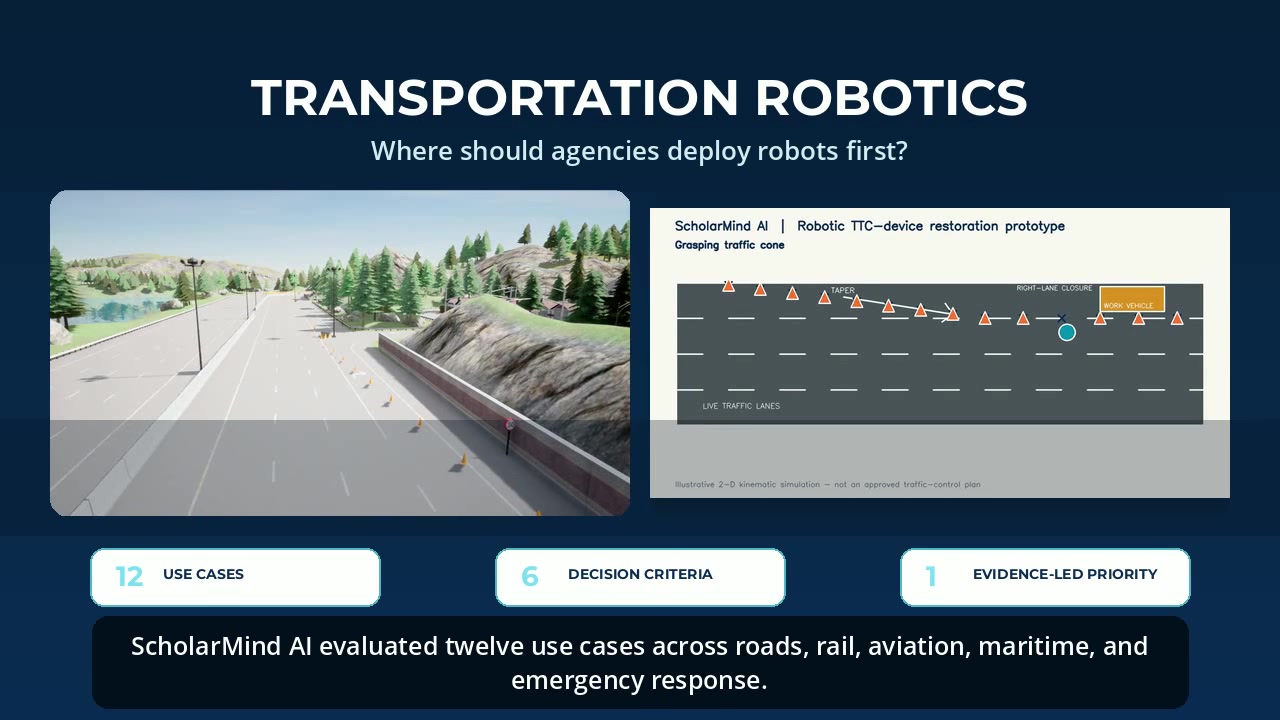
A source-linked pathway from work-zone risk evidence to candidate inspection-robot tasks
The research separates recorded safety evidence from engineering inference, then maps candidate robot tasks to sensing, autonomy, and validation requirements.
Current prototype: real-time camera → YOLO → multi-client web pipeline; Active SLAM loop is the next validation gate
The active program adds mobile camera/IMU capture, visual odometry, uncertainty estimation, next-best-view guidance, and active loop closure. It is presented as ongoing work—not completed SLAM performance.
Understand preparation, research interests, available time, and goals.
2
Roadmap
Define a six-month to three-year plan with staged deliverables.
3
Technical Training
Learn the programming, data, AI, vision, or robotics foundations required by the project.
4
Project Execution
Collect data, design experiments, build models, analyze results, and iterate.
5
Research Communication
Turn the work into a portfolio, report, poster, presentation, video, or manuscript.
6
Continuous Growth
Use progress reports and reflection to plan the next stage of development.
Research in one minute
A concrete example of how the Lab works: begin with public evidence, distinguish facts from inference, define candidate robotics tasks, and state the next validation gate.
English narration and captions · 60 seconds · Simulation footage is labeled and is not presented as field performance. Read the full evidence review →
What students can produce
A project website or GitHub portfolio
A technical report, research poster, or demonstration video
An extended abstract or full research paper
Materials for a conference, journal, or innovation competition
Accurate project descriptions for applications and interviews
Our principle: We support authentic research and rigorous communication. The Lab provides professional mentoring and agreed deliverables, but does not guarantee publication, awards, or admission to any institution.
Find the right research starting point
Begin with an assessment. We will review the student’s preparation, interests, and available time and recommend a practical next step.